Claude Is Adding Invisible Watermarks to Text: What Can AI-Generated Content Marks Tell Us?

Anthropic has explained how it plans to add machine-readable marks to content generated or processed by Claude.
Text will carry an embedded watermark that people cannot see. Supported files such as images will include digitally signed provenance information based on the C2PA standard. The policy is connected to the EU AI Act transparency obligations that became applicable on August 2, 2026.
This may sound like a simple way to separate AI-generated content from human work, but the marks have important limits. Finding a mark does not prove that Claude wrote everything, and failing to find one does not prove that a person worked without AI.
What will Claude mark, how will the system work, and what should people who use Claude for writing, translation, coding, and other work pay attention to?
Anthropic is introducing two types of marks
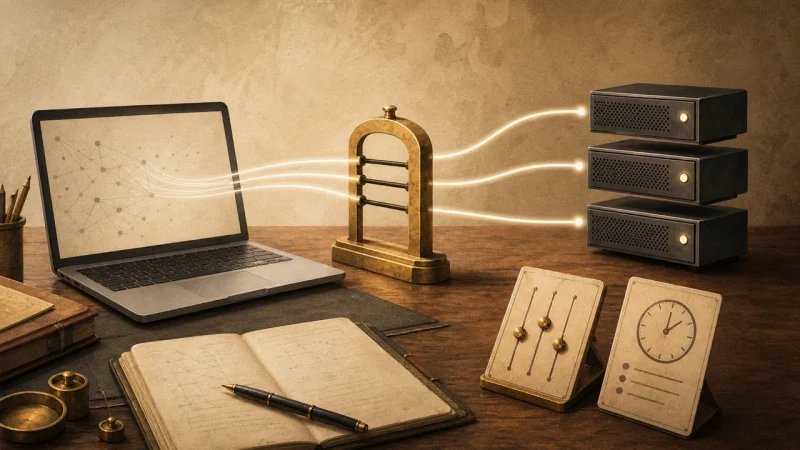
Anthropic plans to combine two different techniques to make AI-generated content more transparent.
| Content | Method | Visible to people? | Primary purpose |
|---|---|---|---|
| Text | A watermark embedded in the text itself | Normally invisible | Detect a signal that Claude may have processed the text |
| Supported files | C2PA-based, digitally signed provenance metadata | Visible through compatible tools | Provide clues about processing history and possible tampering |
This is not the same as adding a visible “Generated by AI” label at the end of a response. The information is carried within the generated or processed content so that a detection tool can inspect it.
The EU AI Act is driving the policy
Anthropic signed the Code of Practice on Transparency of AI-Generated Content as a provider of generative AI models and systems. The code supports compliance with Article 50(2) of the EU AI Act, and the new help article explains how Claude will implement that commitment.
Article 50 aims to reduce deception and manipulation. It covers machine-readable marking of AI-generated or manipulated content and visible labels for deepfakes and certain other content.
Our earlier article, “EU AI Act Transparency Rules Are Now in Force: When Does Smartphone AI Editing Need a Label?”, examined visible labels and ordinary AI enhancement. Claude’s marks are technical signals placed in model output. They are related to, but separate from, a publisher’s or user’s duty to show a visible notice.
When and where the marks will apply
According to Anthropic, new Claude models launched in the EU on or after August 2, 2026 will support marking from the day they launch. The company is also working to add marking support to models released before that date during the applicable transition period.
The marks are not limited to output created inside the EU. For supported models, marking will apply wherever Claude is offered worldwide.
- Claude on the web, desktop, and mobile
- Claude Platform (API)
- Claude Code
- Claude Cowork
- Claude Tag
- Supported models accessed through AWS, Google Cloud, or Microsoft Foundry
Not every product will support both marks in the same way. Text watermarks apply across supported models, while signed provenance metadata appears only for supported file processing. A cloud partner may support the text mark without supporting the file metadata.
How the invisible text watermark works
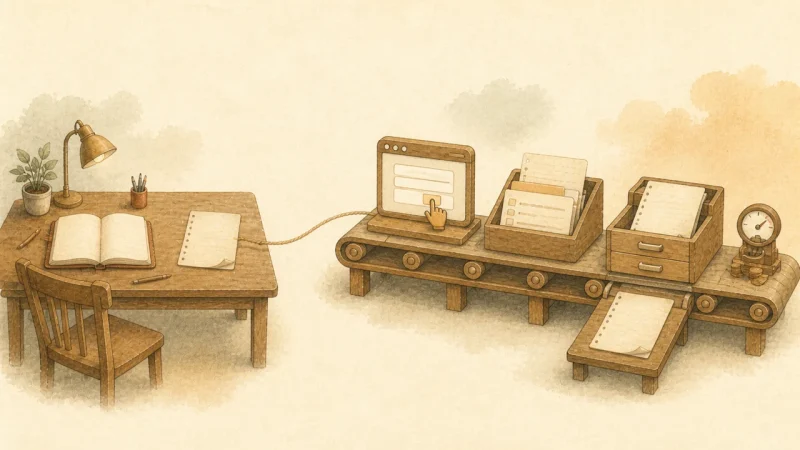
When a supported Claude model generates text, it will weave an imperceptible watermark into the text itself without changing the response’s meaning, quality, or readability.
Because the watermark is part of the text, it travels when someone copies and pastes the text and may survive some editing. It is applied at the model level, so output from the same supported model can carry it through the API, Claude Code, and other products.
Anthropic has not disclosed whether the signal depends on word choice, spacing, or another technique. Detection documentation is still forthcoming, so there is not yet a general public tool for checking arbitrary text.
Supported files will carry C2PA provenance metadata
When Claude generates or processes a supported file such as SVG, PNG, or JPEG, it will attach signed provenance metadata. C2PA is an open standard for recording a file’s origin and editing history in a verifiable form.
A valid signature can help a tool determine whether the provenance information has been changed since it was signed. Anthropic says that a supported label can indicate that Claude processed the file and help detect whether the file was tampered with afterward.
C2PA does not prove that an image is true. It verifies the relationship between a file and its provenance statements; it cannot guarantee accuracy, rights clearance, or trustworthiness.
A mark does not mean Claude is the author
One of the most important parts of Anthropic’s announcement is its warning not to treat a detected mark as conclusive proof of authorship.
A person might write a document and ask Claude only to perform one of the following tasks:
- Correct spelling and improve readability
- Translate the document into another language
- Summarize a long passage
- Convert text into an SVG, image, or another file format
The output may carry a Claude mark even when the original ideas, writing, or data came from elsewhere. It may also be revised or combined with other work afterward.
The mark signals, at most, that content may have been processed by a supported Claude model. It does not measure AI’s contribution, identify who developed the ideas, or assign responsibility.
No detected mark does not mean a person wrote it
The reverse assumption is just as risky. Anthropic lists several situations in which content generated or processed by Claude may no longer carry a detectable mark.
- It came from a model released before marking support was available
- The text was heavily edited, paraphrased, or translated
- It was mixed into other writing
- The passage is too short to retain a reliable signal
- File metadata was removed by re-saving, format conversion, or taking a screenshot
- The product, feature, platform, or file type did not support that form of marking
| Detection result | What it can suggest | What it cannot prove |
|---|---|---|
| Mark detected | Claude may have processed the content | Claude created everything, the content is correct, or the rights are clear |
| No mark detected | The tool did not find a supported mark | No AI was used, or a person created everything alone |
This problem affects AI-detection tools generally. A yes-or-no verdict can misidentify human work while missing AI content that has been edited or converted.
What should Claude users do?
You do not need to change your everyday workflow immediately
Supported models add marks automatically; users do not need to enable a setting. Anthropic’s explanation does not say that the marks contain an account identity or conversation content.
A machine-readable mark is separate from a visible disclosure. Users must still follow any AI-use rules set by a platform, client, school, or workplace.
Keep your own record of the creative process
A mark cannot explain the division of work or establish rights to source material. For important projects, keep drafts, prompts, revision history, references, and model information.
We discussed this distinction in “Can You Deliver AI-Generated Work to a Client? The Difference Between ‘Permitted’ and ‘Safe to Hand Over.’” A mark supports a provenance explanation but does not replace quality checks, rights checks, or client communication.
Preserve the original file if its provenance matters
To retain C2PA provenance, keep the original file from Claude. Re-saving, format conversion, or social-platform compression may remove the metadata.
Metadata loss is not automatically dishonest; it occurs during ordinary image processing. Its absence cannot establish how a file was created.
What this means for developers building with Claude
A model-level mark may not satisfy every transparency obligation for a product built with the Claude API. Anthropic tells developers to assess Article 50 for their own service and use case.
Developers should watch for documentation on detection, file support, transformed output, and visible disclosures. Teams serving the EU should evaluate their implementation and seek specialist advice where needed.
AI Jiten’s view: this is a provenance clue, not an AI detector
Discussions often seek one test that decides “AI or human.” Real work is collaborative: a person drafts, AI edits, the person adds material, and another tool converts the result.
Claude’s marks do not turn that process into a percentage. They add a signal that content may have passed through Claude and provide another way to follow the history of a supported file.
The mark should begin an explanation, not act as a guilty verdict. A plain-language account—“Claude proofread this article” or “Claude generated this image before a person edited it”—combined with machine-readable provenance offers a more accurate form of transparency.
Summary
Anthropic plans to embed invisible watermarks in text from supported Claude models and attach C2PA-based, digitally signed provenance metadata to supported files such as SVG, PNG, and JPEG. New supported models will launch with marking, while Anthropic is working to add support to earlier models.
The marks indicate only that Claude may have been involved in processing the content. A detected mark does not make Claude the author, and no detected mark does not prove that AI was absent. The system also does not guarantee accuracy, copyright status, quality, or responsibility.
Technical details about detection are still forthcoming. Claude users should not rely on the marks alone. Keep original files and revision records for important work, and be prepared to explain in plain language how AI contributed when a platform, client, or audience needs that context.
Sources
- Claude Help Center: “How Claude marks AI-generated content”
- European Commission: “Code of Practice on Transparency of AI-generated Content”
- European Commission: “Code of Practice on Transparency of AI-Generated Content FAQ”
- C2PA Technical Specification 2.4
This article is based on information available as of August 11, 2026. Technical details, supported models, and detection methods may change. Seek professional advice when a legal determination is required.