Write the Article Yourself, Hand the Chores to AI: Codex and Antigravity as Writing Assistants
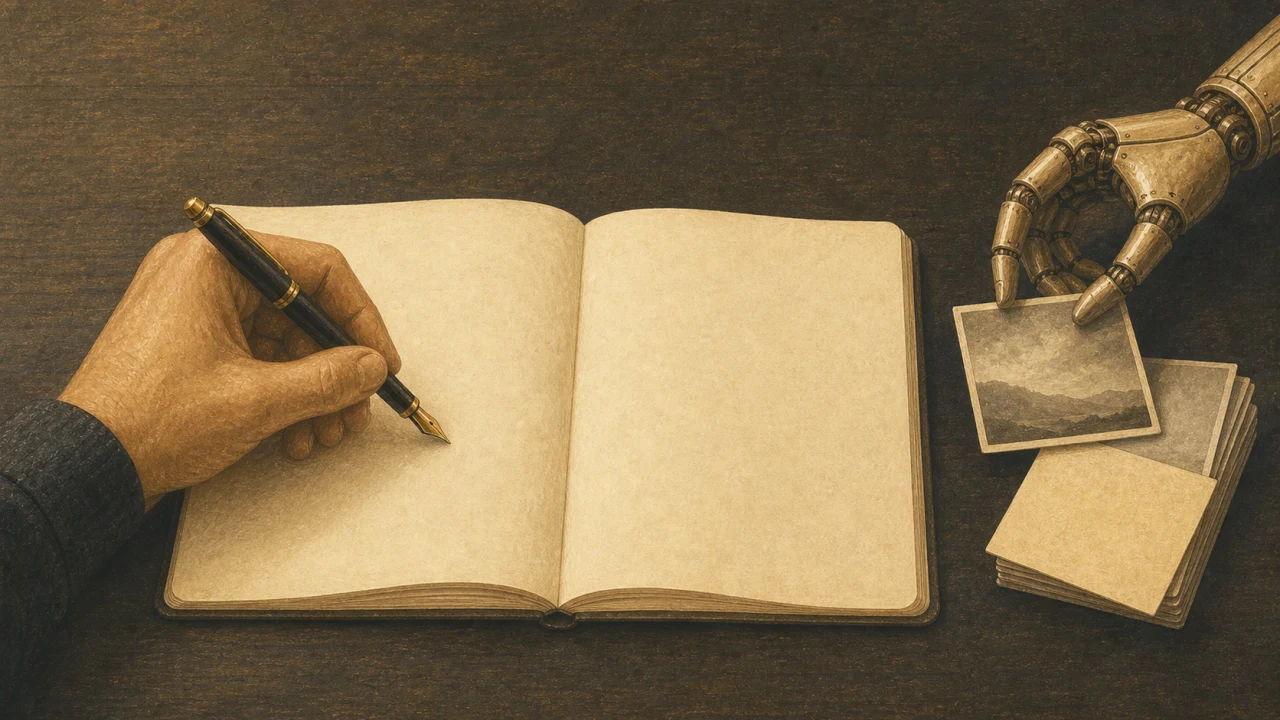
Having AI write an article tends to evoke everything from the title to the body being generated automatically. What felt right to me in spring 2026 was writing the substance myself and handing the tiresome work around it to AI.
This article reworks practical notes published on 1 May 2026, presented as a record dated 2 May 2026. Where the products stand now is added at the end, as of 20 July 2026.
Make the AI an editing assistant, not a ghostwriter
Rather than having an AI write the body from nothing, I find it works better to have it check what I wrote for typos, phrasing, and repeated structure. Only the person who had the experience can write the experience; finding gaps and hard-to-read passages is what AI is good at.
This division keeps my own register while shortening the pre-publication check. Not adopting every suggestion, and instead asking what bothered it and fixing things myself, works perfectly well.
Four tasks that saved the most time
1. Placing images in the article
Give Codex the folder of images and the article’s Markdown, and have it match text to file names and insert images in the right places. It can also draft alt text from the image content, which removed a great deal of mechanical work.
2. Revising and listing what to check
Beyond typos, have it flag terms that need more explanation for beginners, passages that repeat the same content, and places where the article does not fully answer its own title. The trick is not to have it rewrite the whole thing, but to have it list the problems.
3. Drafting featured image ideas from the article
Have it read the body and choose one central metaphor. Building the image prompt from that keeps you from ending up with a mood image unrelated to the content. The useful step was less the image generation than the question of what this article would be if it were a single object.
4. Producing a rough draft only when you cannot start
When the structure will not settle, I sometimes hand over several past articles and ask for a rough draft. Not to publish it, but to read it the way you would read someone else’s manuscript and find what I actually want to write.
The pre-publication check is the best thing to delegate first
You do not have to hand over a whole article at once. Starting with short requests like these is how you find the distance that suits you.
- List only typos and inconsistent proper nouns
- Pull out terms that need explaining for beginners
- Tell me which paragraphs repeat the same content
- Give me three familiar metaphors usable for the article’s image
Whether you may hand the material over is a separate check
If the draft contains client names, unannounced plans, personal data, or anything a contract prevents you from sending outside, handing it over as-is is not safe. Do not rely on the service’s data settings alone; anonymize, and confirm you are permitted to use it.
Turn the article’s metaphor into an image brief
Once you have settled on the central object or scene, you can work through composition, lighting, color, and what to avoid, in order. The finished brief pastes straight into whichever image AI you use.
A note as of 20 July 2026
When the original article was written, I was using Codex and Google Antigravity mainly as AI that handled local files. Codex has since gained a desktop app, a CLI, IDE extensions, and cloud use, and Antigravity has widened into a standalone app, an IDE, a CLI, and an SDK.
The entry points changed, but the division of labor — write the parts only you can write, hand the mechanical work and the checking to AI — carries over unchanged. Start by handing over one task that is tiresome but easy to judge.
References
- Delaymania: how I have Antigravity and Codex support my writing
- OpenAI: Codex developer commands
- Google Codelabs: Getting Started with Google Antigravity
Official sources checked on July 20, 2026.