Before Adding More AI Agents, Understand Graph Engineering: Designing Order, Branches, and Review
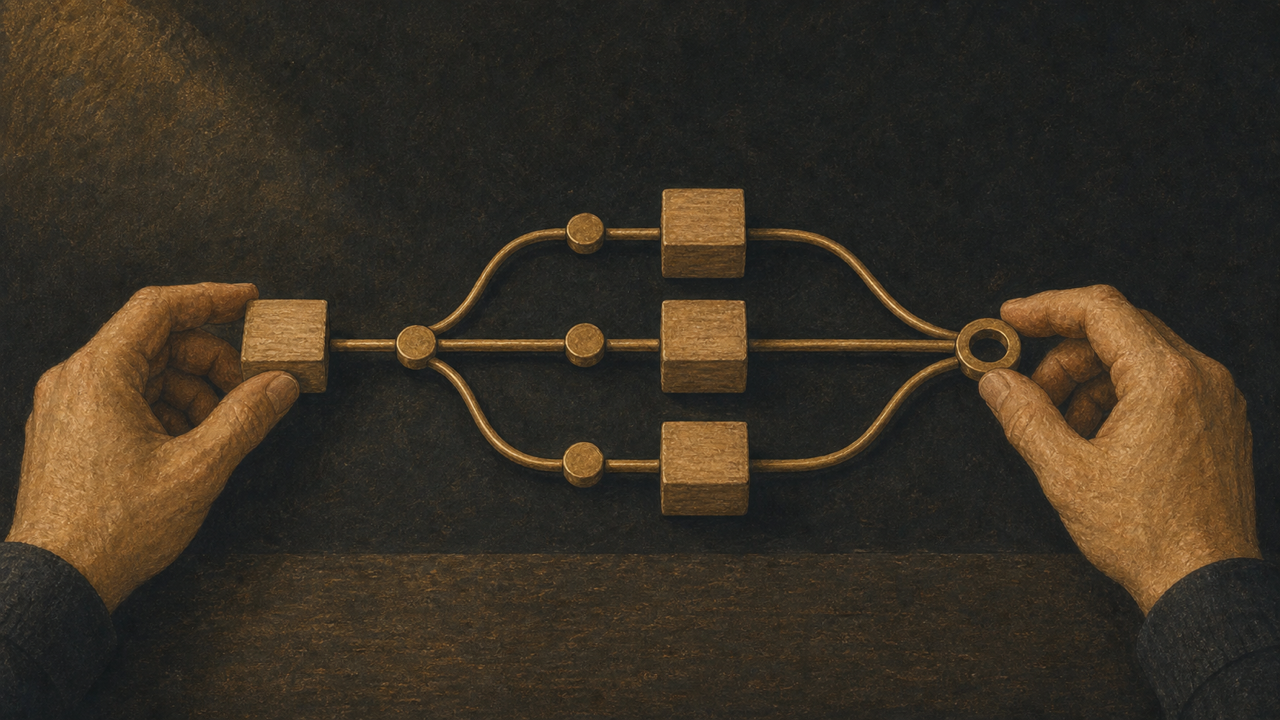
I came across the term “graph engineering.” It describes the design of how several AI agents or processes work together: what runs when, where the flow branches, and who checks the result.
This is less about a sudden new AI technology and more about adding a layer above prompt, context, harness, and loop engineering. In this article, I will explain the idea discussed in the posts, how it differs from Graph RAG, and when it is actually useful.
The information in this article is current as of July 29, 2026.
Here are the posts that started the discussion
These are the posts I referred to while preparing this article.
- A guide to AI agent design that non-engineers can understand
- from prompt → context → harness → loop → graph engineering
The first post is an approachable Japanese overview. The second is an English discussion that goes deeper into practical implementation decisions. Both explain the idea by gradually expanding the unit of work that AI is responsible for.
Graph engineering designs the flow of work
In simple terms, graph engineering connects multiple AI agents or processes as nodes and edges.
- Node: one task such as research, implementation, or review
- Edge: the connection or condition that determines what runs next
- Shared state: the documents, results, and decisions passed between nodes
For example, three agents might research different sources in parallel, another agent might combine their findings, a writer might draft the article, and an independent reviewer might check the facts. A branch that sends only failed work back for correction, or a handoff to a human when approval is needed, is also part of the graph.
The important thing is not to add more nodes. Draw the work first, then add only the roles that the flow genuinely needs.
Prompt, context, harness, loop, and graph are layers
These terms are not competing replacements for one another. They are different zoom levels of the same system.
- Prompt engineering: designing a single instruction
- Context engineering: selecting and organizing the information available when the model decides
- Harness engineering: preparing tools, permissions, rules, and the execution environment
- Loop engineering: deciding how many times work, checking, and correction should repeat
- Graph engineering: deciding how multiple loops run, branch, and run in parallel
The prompt is one input. The context is the information needed for one decision. The harness is one pass through the working environment. The loop is the unit that repeats the work. The graph is the whole job made from several loops.
That is why graph engineering does not replace loops. A loop that is fully self-contained can be viewed as the smallest possible graph: one node with an edge that points back to itself.
A new employee is a useful analogy
Thinking of an AI agent as a new employee makes the layers easier to see.
- Prompt: the assignment given to the new employee
- Context: the documents placed on the desk
- Harness: the tools, permissions, and workplace rules
- Loop: the cycle of doing the work, checking it, and fixing it
- Graph: the departments, handoffs, and approval route
“The research role gathers material, the writing role turns it into an article, and the review role looks for mistakes” is a graph-engineering view of the same job.
Is this the same as Graph RAG?
The names sound similar, but graph engineering and Graph RAG are different concepts.
Graph RAG organizes relationships between documents, people, products, or events as a graph and uses those relationships for retrieval and answers. Graph engineering, on the other hand, designs the execution order of AI agents and processes.
A Graph RAG search can be one node inside a larger graph, but graph engineering is not limited to search. It can cover the entire flow of research, implementation, testing, approval, and publication.
When does a graph become useful?
A graph tends to be worthwhile when several of these conditions are true:
- Different kinds of expertise need to be separated
- Several investigations can run in parallel and be merged later
- Different models or tools are appropriate for different stages
- Only the failed stage should be retried
- You need to audit who made which decision
For AI Jiten’s editorial workflow, this could mean separate stages for research, a first draft, fact checking, featured-image generation, and translation. A human review node at the end can balance efficiency with safety instead of sending everything straight to publication.
Four checks before adding more nodes
Multi-agent systems look attractive, but every extra handoff adds communication, checking, and debugging costs. The decision points from the posts can be summarized as follows.
- Does this node have a genuinely different specialty?
Split out a task only when it needs a different model, tool, permission, or role. A node that merely makes text shorter can make the whole system harder to understand. - Can the shared state be made explicit?
Define the data format being passed around and which fields each node may change. Save intermediate results, and make side effects idempotent so a retry does not publish or send something twice. - Can the routing be trusted?
Use code for predictable conditions such as a length threshold. Let the model judge only questions that genuinely require judgment, such as which source is more relevant. - Is the reviewer independent?
Do not ask the same agent to grade its own work. Use a different model, fresh context, and explicit evidence. Reading can be parallelized, but writes such as publishing or deleting should be centralized when possible.
Sometimes a graph is overkill
Turning a simple research task or a one-file change into a graph can make the configuration and logs larger than the work itself. More model calls also mean more tokens, waiting time, and cost, while debugging becomes harder.
A practical starting point is one loop with a completion check, a maximum number of iterations, and a review step. Move to a graph only when you have a real need for specialization, parallel work, or isolated retries.
What this could mean for AI Jiten
At the moment, the editorial workflow still includes a human review before publication. That is not a failure of automation; it is a deliberate approval node.
If the volume of articles grows, a graph could make the stages more visible: source collection → outline → draft → fact check → image → translation → human approval. The value would come from making the handoffs and stop conditions explicit, not from adding agents for their own sake.
Summary
Graph engineering is a name for coordinating several AI agents or workflows. It sits above prompt, context, harness, and loop engineering, and focuses on order, branching, parallel work, shared state, and review.
Whether the term becomes standard or not, the underlying questions will remain: Is one loop enough for this job? Which tasks deserve a separate role? Where should a human approve the result? Draw the workflow first, and add a node only when there is a clear reason for it.
The referenced posts and articles were checked on July 29, 2026. Examples and figures in those posts reflect the authors’ environments and do not automatically apply to every system.